


Sea Turtles - Part 1 of 4
By Alonso I. Rodríguez de la Parra, explorer and documentarian
"Wanting to understand life will always be the greatest ambition, but also the most naïve of all." — Alonso I. Rodríguez de la Parra, explorer and documentarian

The story of sea turtles in Mexico is one of many contrasts. A species that has existed on Earth for millions of years was pushed to the brink of extinction by human predation. Despite being on the edge of extinction, it managed to recover its numbers in a very impressive way, thanks to the actions of those same humans. And although this may seem like something to celebrate, we can't let our guard down for a second. Even though these efforts have worked, following laws and rules with very rigid punishments, this species is still on the menu and in the crosshairs of many poachers. What impresses me most is that many species have survived the mass extinctions caused by nature, but when you compare that against the extinctions we humans have caused, we are the most dangerous.
I think we've all seen a turtle in some documentary or in a photograph, but when I saw them with my own eyes — and the way I saw them — it changed everything I understood about them.
A sea turtle is a reptile born from an egg that its mother buries on the beach, and year after year she returns to that same place where she was born to lay eggs again, and so on with each generation of turtles. It's a system they learn intrinsically, and to this day it's difficult for us to understand how all of this is understood or agreed upon among them. Nature has a very beautiful way of organizing life. After roughly 50 days of incubation beneath the sand where these eggs are buried, these tiny and very beautiful beings begin to emerge from the sand. They crawl to the sea with little agility but a lot of adrenaline, because from that day on, among the thousands of turtles that make it to the sea — if a bird doesn't eat them first — only one will grow into an adult turtle and return to lay eggs in that same place.
Visiting turtle camps seems like something lovely and fun, but all of that changes when you're already there in person, witnessing this act of nature. Many turtles lose their lives seconds after being born and are devoured by birds. And upon entering the water, the number of predators they have to face only increases.
Documenting the marine world and what makes it up has its good sides and its bad. On one hand, it's quite an adventure; you meet incredible people and get the chance to dive and swim in underwater realms that feel like a dream. But one of the most beautiful gifts of this craft is being able to witness, with body and soul, the beings that inhabit the waters. Sharing space with wild animals is deeply enriching, and although it sounds romantic, these animals communicate a great deal to us when we observe them with care. And that's the hardest part — trying to capture with the camera those moments where these species pass on lessons for our lives. It's not for nothing that we humans invented fables and all those stories with lessons between the lines we read.
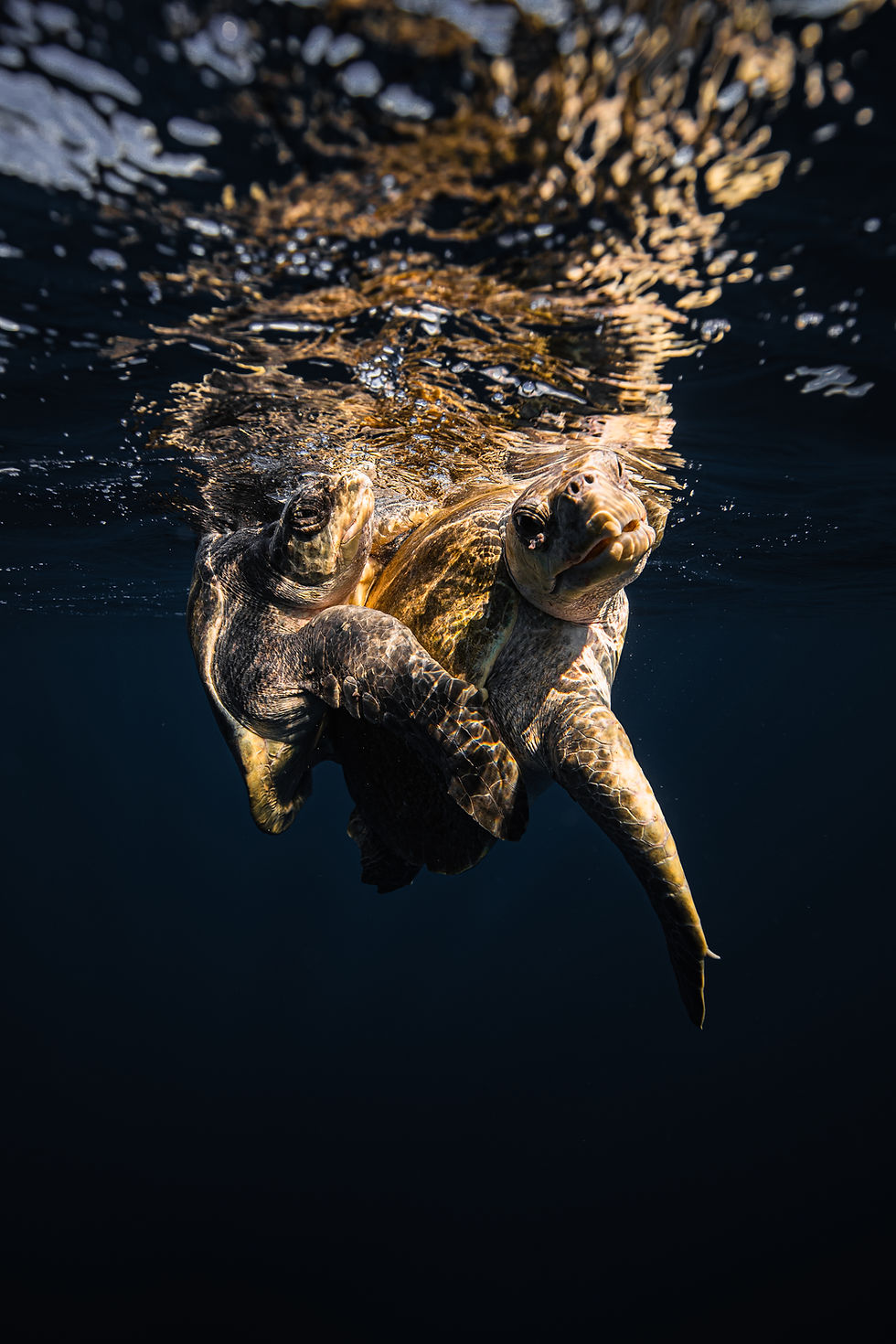
Nature forms itself in sacred, perfect patterns and geometries down to its most minuscule expressions, and nothing is perfect without an altered chaos that breaks the pattern to put things into perspective. Without these contrasts we couldn't describe good and evil, or darkness and light. And in every beautiful story you know or interact with comes a swipe of reality where you also come to know the wickedness and the tempest that exist within the majesty of the world.
Turtles are resilient and extremely important for the planet's balance, but at the same time they are animals that could vanish in the blink of an eye. At the same time that I observe all the beauties of the natural world from a panoramic place within my mind, moments of chaos and destruction are also being analyzed, because all of this is always happening at once.
I took a flight to Huatulco and from there drove to a beach called La Escobilla, a place famous for one of the most beautiful natural spectacles one can witness on Earth: one of the most numerous turtle nestings that exist in the world. Millions of turtles come to this coast to lay their eggs. Watching from a distance as thousands of turtles emerge from the water and search for the perfect spot to dig a hole is thrilling. They have to cross giant waves that could easily slam them against the seabed and end their lives. These waves have a tremendous force, and once on the beach, they must drag themselves across the sand for many meters — some even hundreds of meters — and then begin to dig, slowly pushing the sand to create the perfect depth and there begin to lay the eggs that will give life to this species, which carries in its very existence a kind of wisdom that would be very hard for us to understand. Witnessing this is only a small taste of how hard these animals have it, with life ahead of them and behind them.
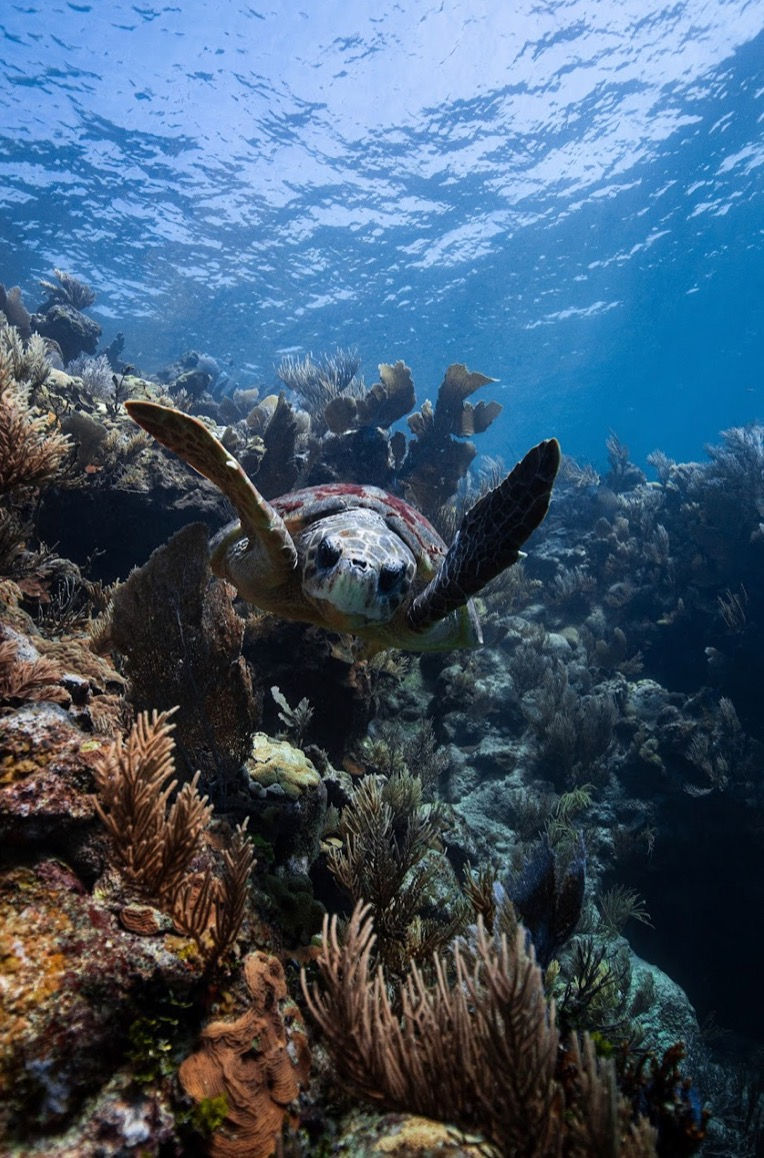
To mention a few of the animals that prey on turtles, here are the ones my friend Sostenes Rodríguez told me about:
Beetles, píleles, flies, ants, fungi, damp, dogs, badger, raccoon, coyote, gray fox, opossum, armadillo, skunk, crab, birds, vultures, stork, spoonbill, nocturnal birds, tuna, skipjack, needlefish, marlin, sailfish, and sharks.
It's one of the living beings with the most predators in the world, so I'll stop listing animals for the good of us all. But I will tell you that we have been the only predator that has threatened their complete existence.
The sunsets in these places I visit are always a spectacle. Every shade of color is always different, every brushstroke of light in the sky has its own texture, and the scene of sky and land reflected in the ever-changing mirrors of the water makes each one completely unique and unrepeatable. The beauty of continuity and the infinity of circumstances always influence our day to day. Whoever believes these things have no metaphysical effect on us is someone who hasn't yet been able to open their eyes, because they truly haven't been born. For when we begin to see existence, that is when life truly begins.
Explaining life has always been the greatest challenge of all thinkers, of all explorers and scientists. Wanting to understand life will always be the greatest ambition, but also the most naïve of all. But it's in that stubbornness that many of us travel to give meaning to our lives. I hope that someday someone discovers that simple question to which, in its complexity, we've never found an answer.
Turtles must understand life in a way so different from how we have tried to. They've been here much longer than us, and they've managed to survive in ways even more intelligent than how we have tried to exist. Our intelligence seems only to have disconnected us from this natural wisdom. It has given us pleasures and emotions, ambitions and abilities to try to shape the natural world. But nature will always win when it comes to diverting the way it has worked all its life. There are animals that can see sounds, and others that can hear colors. And with that said, how much do we really understand?
Turtles travel abyssal distances only to return to the very place where they were born. There are periods of their lives in which we have no idea what happens. And despite knowing so little about them, they've managed to create a very strong space of empathy in us humans. A person caught hunting, trafficking, or eating turtle can receive up to 30 years in prison. It's one of the animals we've protected the most in Mexico, and thanks to that, the turtle population worldwide still exists. So yes, we were the ones who nearly wiped them out, but we're also the ones who have helped this species keep existing. This is something I think we should do with all species, and it's something we're doing, but we truly need to treat many of the life forms that exist on the planet this way.
La Escobilla is a beach that is now a sanctuary for turtles. It stretches for approximately 25 kilometers, but only 15 of them are reserve, and it's along roughly 7 kilometers where these animals gather most to spawn. However, this doesn't mean they don't do so along the entire 25-kilometer stretch of this beach. With the arrival of the turtles, people excited to see them also begin to arrive. It's a very strange feeling to see so many turtles and so many humans on the beach at the same time. This doesn't seem to bother the turtles, because over time they begin to understand that we are not a danger to them in that place.
Most people respect this act, and although they take it as a spectacle, something more is also happening. Each person who witnesses this begins to understand life in a different way, begins to empathize with everything these beings are doing in their existence — and that's precisely the reason for the success in conserving this species. When we connect deeply with animals, we begin to care for them. And that's why it's important that we keep connecting — not taking advantage, but seeing how our role can serve to protect biodiversity and the world.
An example of this is the family and the group of people who work at this refuge. In a not-so-distant past, all of them made their living by hunting and lived off these animals. Together with everyone who hunted and ate turtle, the turtles began to disappear, and very few now reached the coasts. Something that, if not addressed promptly, would put this family in serious trouble. But now they've realized that these animals have left them far more alive than dead.
The regenerative tourism carried out around this species is an important source of income for the state. Turtles attract millions of people and are among the greatest teachers. I dare say that simply observing them brings an understanding and a desire to protect the natural world for its own sake. An ancestral wisdom we still don't understand, a way of communicating that only turtles know.
And with that said, let me tell you the behind-the-scenes story that changed my life while I was documenting the turtles. Some of the answers to how these turtles find their way back to where they were born, and many things that arose in my mind after documenting this beautiful animal.
You can watch the documentary on YouTube, but the story as I lived it you'll only be able to read later on.
"Wanting to understand life will always be the greatest ambition, but also the most naïve of all." — Alonso I. Rodríguez de la Parra


Comments