


The Gifts of Conservation Science
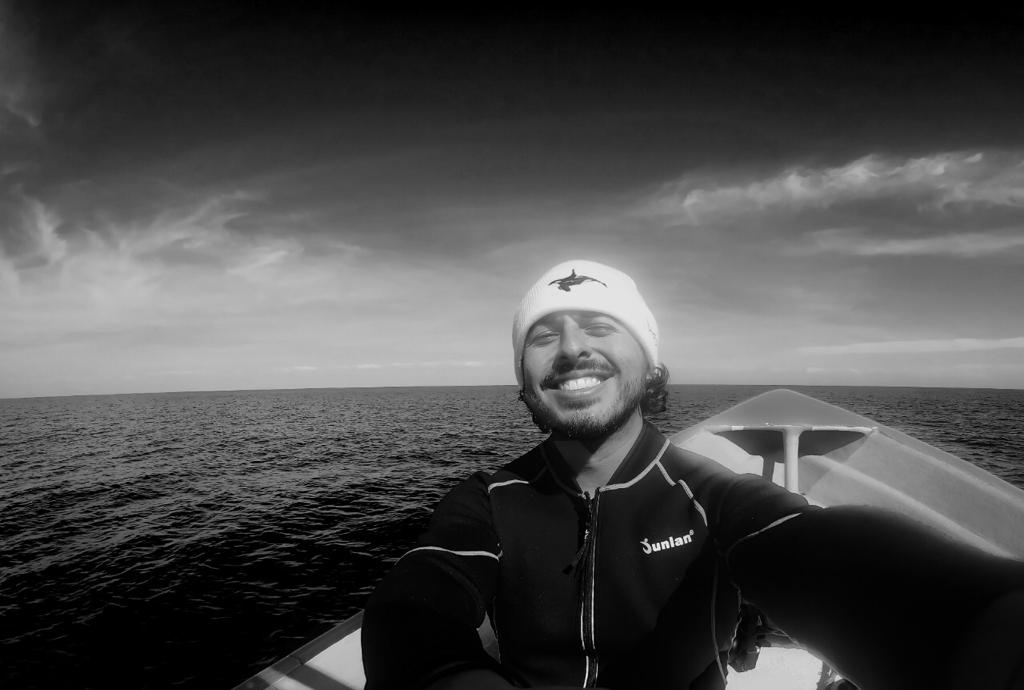
Esteban Salazar
Biologist, photographer, and scientific data analyst.
@essalazarc
The passion for helping and conserving the environment and wildlife begins in a very similar way for all of us who dedicate ourselves to this work. For me, it started with my parents telling me that I should respect all living beings, and watching documentaries on Animal Planet and National Geographic. From then on, I knew I wanted to dedicate myself to conservation.
By a twist of fate, I decided to pursue it through the field of science. When I started my biology degree, I was captivated by the field trips - I suddenly felt like I was inside a documentary. However, the more you delve into conservation science, the more you realize that fieldwork is only a very small part of it. Most of conservation science is done while working on a computer - reading articles, writing scientific notes, programming statistical code - and the occasional field trip. These elements are what make up conservation science.
Upon arriving in La Paz, this tendency intensified. Despite being in one of the most beautiful places in the world, with its unique marine life, I spent many days behind a computer screen. This didn't discourage me; I also found myself fascinated by computer work. But it doesn't compare to fieldwork, in my opinion. So whenever we were told we'd be heading out to the field, I was incredibly excited. I've discovered that going out with an open heart and no expectations is the best way to experience the sea - or any ecosystem.

One day we went camping on an island in La Paz Bay, searching for sharks to monitor. These trips involve heading out into the sea in complete darkness, which is when there's the best chance of seeing sharks. Out at 7 p.m., back by 11 p.m. Rest a few hours, then out again at 3 a.m. and back at camp by 7 a.m. It's one of the most demanding field experiences, especially toward the end of the week when fatigue sets in - but the passion and joy of being at sea never fades.
One night, around 11 p.m., we decided it was time to head back to camp. About a 20-minute trip from where we were monitoring sharks to the shore. It was a new moon and we were in total darkness. The stars were a spectacle in themselves; gazing at the constellations from the ocean will always be one of my favorite experiences. The cold wind whipped against our faces. Suddenly, we passed through a huge patch of bioluminescence. As the panga moved forward and stirred the water, the bioluminescence became perfectly visible. It was so bright it lit up the faces of our companions. A truly beautiful sight.

Suddenly, I lowered my head and began to see a white silhouette beneath the panga in the depths, getting closer and closer. I didn't know exactly what I was seeing. It looked like something out of Alice in Wonderland or Life of Pi. And then we started seeing more of these silhouettes - three, four… more than five! They were dolphins swimming beneath the panga.
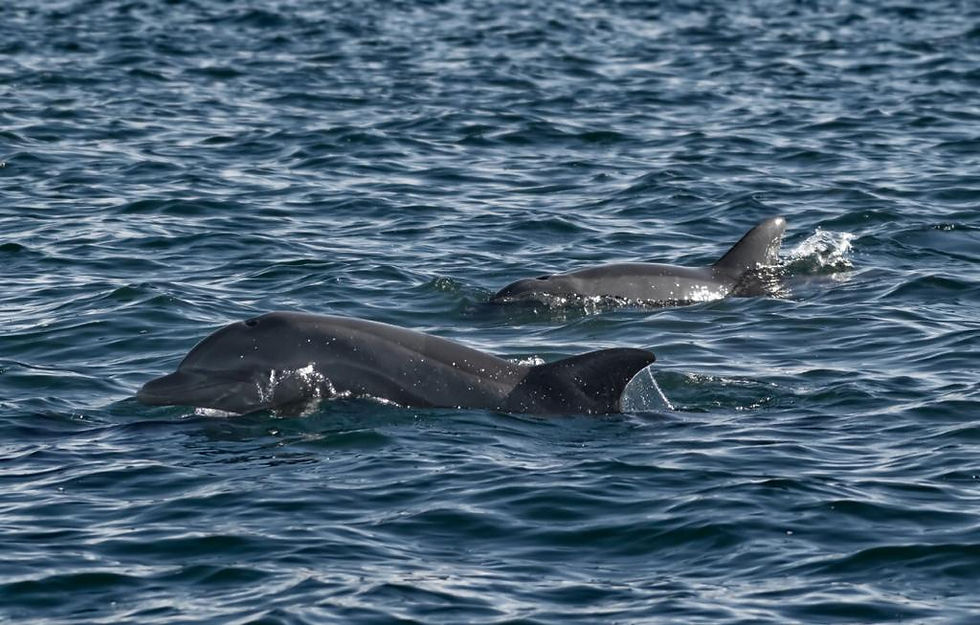
Almost all of us who live in La Paz have been fortunate enough to witness dolphins swimming near a panga, but seeing it at night, under the bioluminescence, has been the most beautiful and unique spectacle I've ever witnessed. A completely surreal scene; there comes a point where the brain doesn't quite know what it's seeing. White shadows swimming beneath a black sea, leaving their trail of bioluminescence… almost like dancing. Truly spectacular. And suddenly, the dolphins began to leap in front of the panga, and as they surfaced, some bioluminescent particles clung to their skin. They were glowing out of the water, too.
After about three minutes, the bottlenose dolphins (Tursiops truncatus) left, and the patch of bioluminescence disappeared as well. At one point I tried to record it, but the technology I had at the time wasn't capable of capturing that speed in such darkness. Now, this experience exists only in my memories - and in those of my companions.
This is my best effort to share my experience with you, and whenever I tell it or write it down, I feel that words fall short of what I lived that day.
All I can say is that conservation science may have its difficult and frustrating moments, but its rewards in the field make it worth every second. Wild species need our help to survive in the long term. Let's continue to care for and protect our seas so that these spectacles can be appreciated by future generations.
Comments