


EL SARGENTO EJIDAL TRAIL PARK: A STORY OF CONSERVATION, COMMUNITY, AND LEGACY
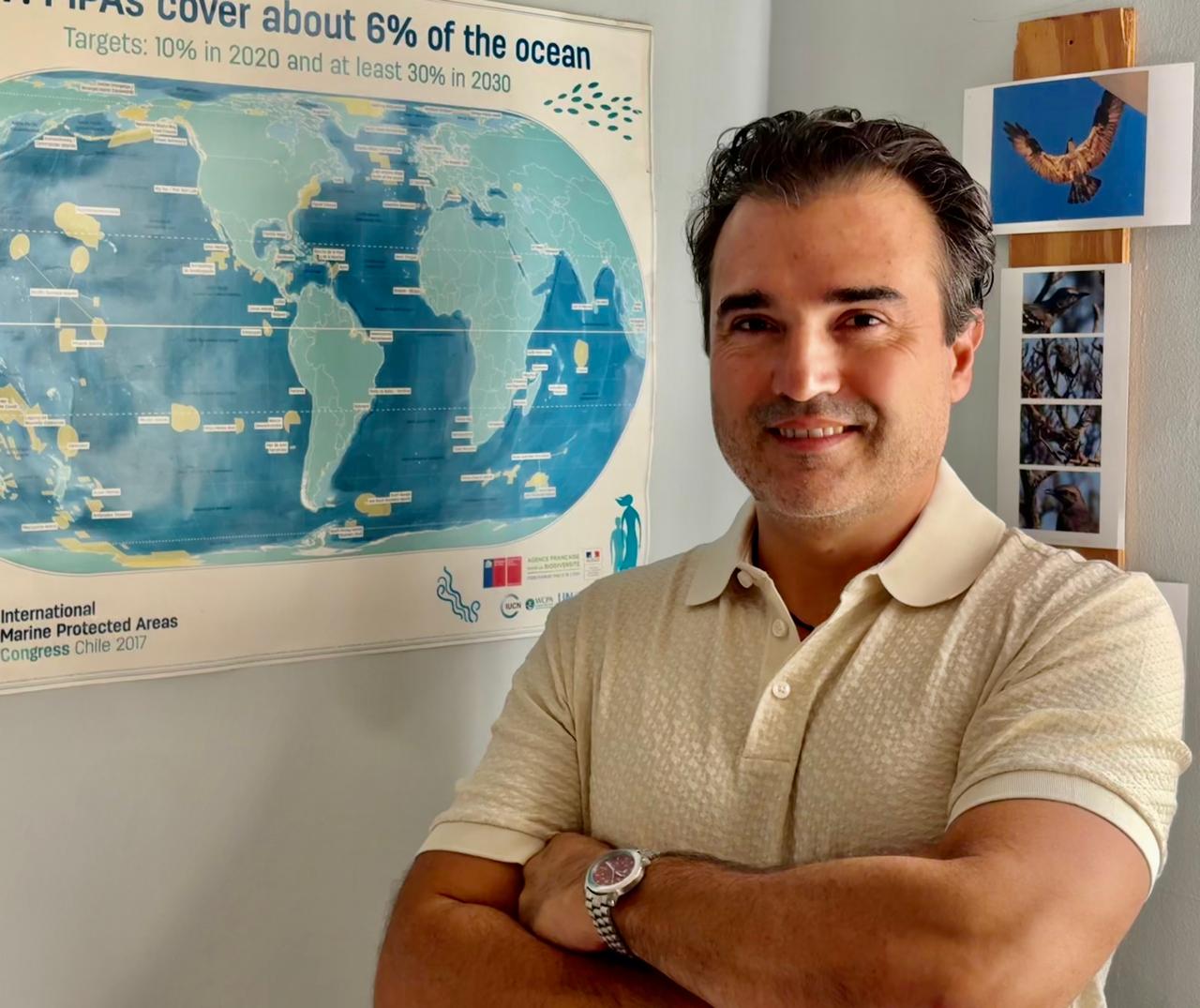
By Daniel Camilo Thompson Póo, conservation lawyer
The origin: a file, a dream, and many hours of reading
When Ermanno Strepparola, from the La Ventana and El Sargento Trail Association (La VESTA), asked me to analyze the legal viability of the project, I had no idea of the magnitude of what we were about to build. But I must give credit to the person who first set me on this path: my friend Pablo Castellanos, who two years ago introduced me to Ermanno on a trail while we were mountain biking. Without that conversation, none of this would have begun.
This effort also would not have been possible without the connection with Marina Hirales and her outstanding work compiling information alongside the civil association Alianza por la Regeneración de la Comunidad (ARCo), which, together with La VESTA, has been fundamental in shaping this initiative.

I sat down in front of the core file of the El Sargento Ejido and its annex, La Ventana: presidential resolutions from 1949, assembly records dating back to 1994, maps, and the ejidatario registry, with 117 names listed in the current National Agrarian Registry.
The due diligence was thorough. We reviewed 26 maps, 9 board meeting records, and documents from 1949, 1978, 1994, 1999, 2006, 2008, and 2024. As a lawyer, I quickly understood we were facing a unique opportunity: more than 2,651 hectares of communal land that could transition from urban development pressure to active conservation. The proposed area, initially 543 hectares and later adjusted to 200, represented 20.7% of the communal land. It is a significant percentage, but manageable and, above all, strategic.
I identified a key challenge: delays in registering assembly records with the National Agrarian Registry. Not an insurmountable obstacle, but a clear warning. As explained in the legal opinion, notary Alejandro Davis noted that registration timelines can exceed 12 months. Still, the documents existed, were certified, and the will of the assembly was clear.
The legal framework: an ecological easement with purpose
The agreement we designed is not a lease, a transfer, or a sale. It is a Voluntary Ecological Easement, a temporary real right lasting 20 years, applied to communal lands. The ejido remains the owner. Always. What changes is the use: no urban development, no logging, no hunting. In return, La VESTA provides an annual incentive that increases over time, managed through a seed fund.
But what makes this model truly meaningful is that the ultimate beneficiaries are not just the organizations or the ejido. They are the public at large. Anyone will be able to walk, mountain bike, camp under the stars, and observe endemic flora and fauna.
A key element is the participation of the National Commission of Natural Protected Areas (CONANP), through the Gulf of California Islands Flora and Fauna Protection Area, which agreed to act as the dominant estate. Cerralvo Island, with its 160 square kilometers of natural beauty, is now the legal beneficiary of the environmental services generated by these conserved 200 hectares across from it. The authorization was issued on March 2, 2026.
The last three ejido assemblies were intense moments. The agreement was read in full, point by point, with support from the Agrarian Attorney’s Office and legal advisors. The result was majority approval, with no opposing votes. This was ratified on March 29, 2026, leading to the formal signing on April 7, 2026.

The agreement establishes that funds will be deposited directly into the ejido’s account, that the contract is altruistic, and that any future landowners will assume the same obligations. The ejidatarios understood they were not losing their land. They were gaining a natural economic asset that enhances the value of their territory.
The news that spread through the community
When local media announced that the Ejidal Park was a reality, I knew all the silent work had been worth it. The El Sargento ejido voluntarily chose conservation over real estate development. Protecting 200 hectares of prime trail land in Baja California is no small feat. It is a legacy that will define this community for the next 20 years and beyond. No construction, only trails, nature, and community. That is exactly what was signed.
My perspective as a father and citizen

I arrived in La Paz 10 years ago, born in Chiapas but now “Chiapaceño” by choice. I still remember the first day I visited the trails with my son. He was 10 years old, riding his bike with a mix of wonder and clumsiness, while I followed behind, watching the sun set over the Gulf, lighting up Cerralvo Island in red, with pitahayas along the trail and birds flying overhead.
That landscape, recognized in the agreement as a cultural service, is something we have continued to enjoy together. It is the same land I hope my grandchildren, and their children, will also experience.
Today, I imagine families walking the trails, young people training as certified guides, and ejidatarios deciding together how to use the benefits, whether for infrastructure, healthcare, or community development. The park is free and open to all, but its long-term success depends on us. The invitation is clear: get involved, support it, be part of it.
As my mentor George Wallace used to say, “Be a citizen of the place where you live, no matter where you come from.” I am from Chiapas, but La Paz is my home. It fills me with pride to have contributed my legal knowledge to a project that transcends politics, origins, and generations.

A 20-year legacy and hopefully forever
The agreement runs until 2046. I hope, and will work, to see it renewed. In the meantime, hundreds of thousands of people will be able to explore over 40 kilometers of trails, camp, and connect with nature. Young members of the ejido now have a unique opportunity to become guides, low-impact tourism operators, and stewards of their own land.

The El Sargento Ejidal Trail Park is not just a contract. It is proof that agrarian and environmental law can come together to create something greater. It shows that an ejido, civil organizations, and a federal protected area can work together.
Above all, it is the legacy of a coastal community that chose conservation as a path to prosperity, alongside its land and the sea.
Daniel Camilo Thompson Póo
Lawyer specializing in Environmental, Conservation, Maritime and Property Law.
Consultant for Caring for the Seas of Mexico Civil Association
La Paz, Baja California Sur, April 2026

Comments